Real manuscript case study
How I fixed 57 widow and orphan problems in a nearly 68,000-word KDP manuscript
I used my own full-length dystopian novel to test Typeset Ready under the conditions that short samples miss: 32 chapters, hundreds of pages, dialogue, system notices, response options, scene markers, and page breaks that changed after every pagination correction.
- ≈67,900
- manuscript words
- 322
- final PDF pages
- 57
- pagination defects fixed
- 6 × 9 in
- paperback trim
The final 6 × 9 interior contained 322 PDF pages with an embedded serif typeface set at 11 points, mirrored margins, consistent page numbers, and no clipped text. Reaching that result required fixing structural layout failures and 57 paragraphs or display blocks that had split with a single stranded line.
The test and its success criteria
The source was a finished text-focused novel rather than a demonstration file assembled for the formatter. The target was a 6 × 9-inch paperback interior with an embedded 11-point serif font, approximately 0.625-inch inside margins and 0.5-inch outside margins at the final page-count tier.
- Preserve every word and paragraph boundary
- Begin each of the 32 chapters correctly
- Keep scene markers and structured notices intact
- Embed the selected typeface
- Prevent clipping, overlaps, and missing characters
- Produce a PDF that could be checked in KDP Print Previewer
What passed in the early PDF
The text matched the source manuscript, the page measured 6 × 9 inches, the embedded serif font was consistent, and no text was clipped or overlapped. That technical foundation made the remaining failures easier to isolate.
- Exact manuscript wording retained
- Correct trim dimensions
- Embedded fonts
- Mirrored margins
- Consistent page numbers
- No clipped or broken characters
What the first layout got wrong
Intentional short paragraphs were merged, 116 scene markers were placed inline, 21 chapters began on a previous chapter’s final page, chapter subtitles ran into opening sentences, and structured notices were flattened into prose. Those problems changed the voice even though the words remained intact.
The final pagination problem
After the structural problems were fixed, inspection found 57 paragraphs or display blocks split with only one line on one side of a page break. Seventeen pages began with a scene’s final stranded line immediately before a scene marker.
- Enforce two prose lines on each side of a split
- Keep short display groups together
- Keep the end of a scene with its marker when possible
- Keep every scene marker with following prose
- Regenerate the entire PDF after each correction
The clearest before-and-after example
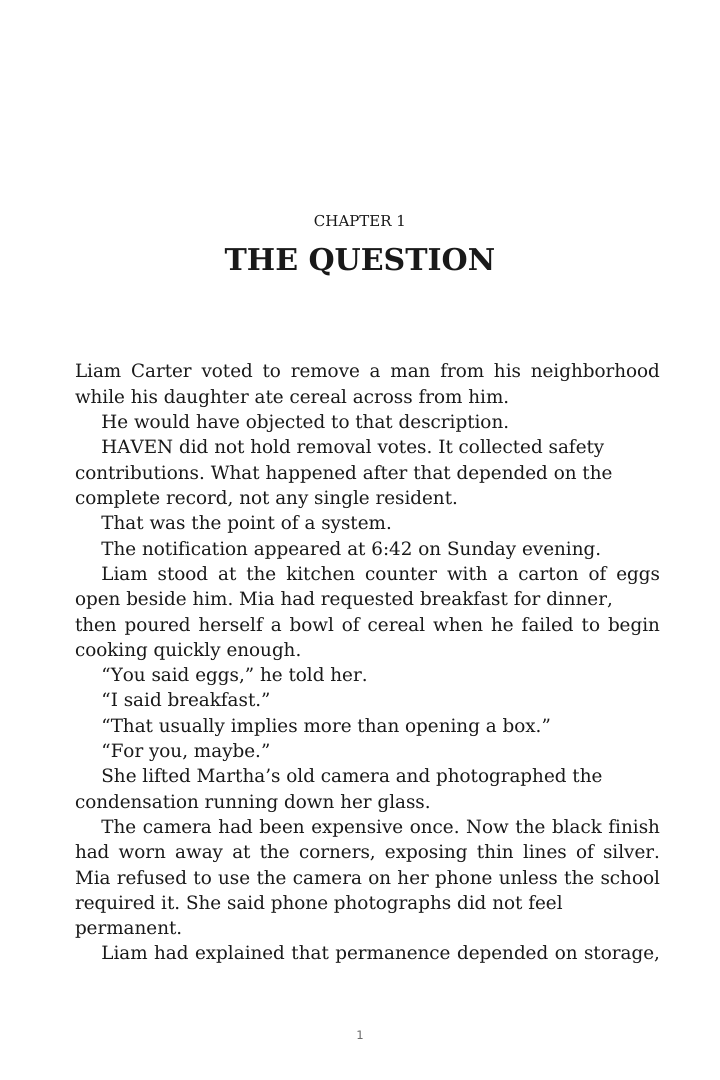
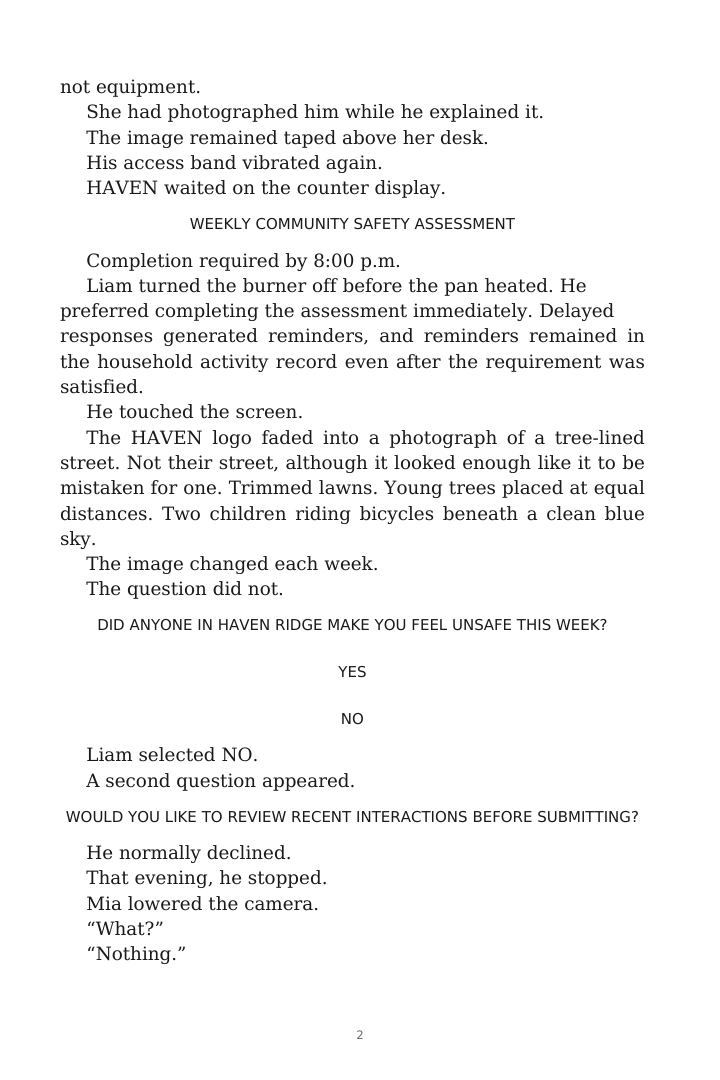
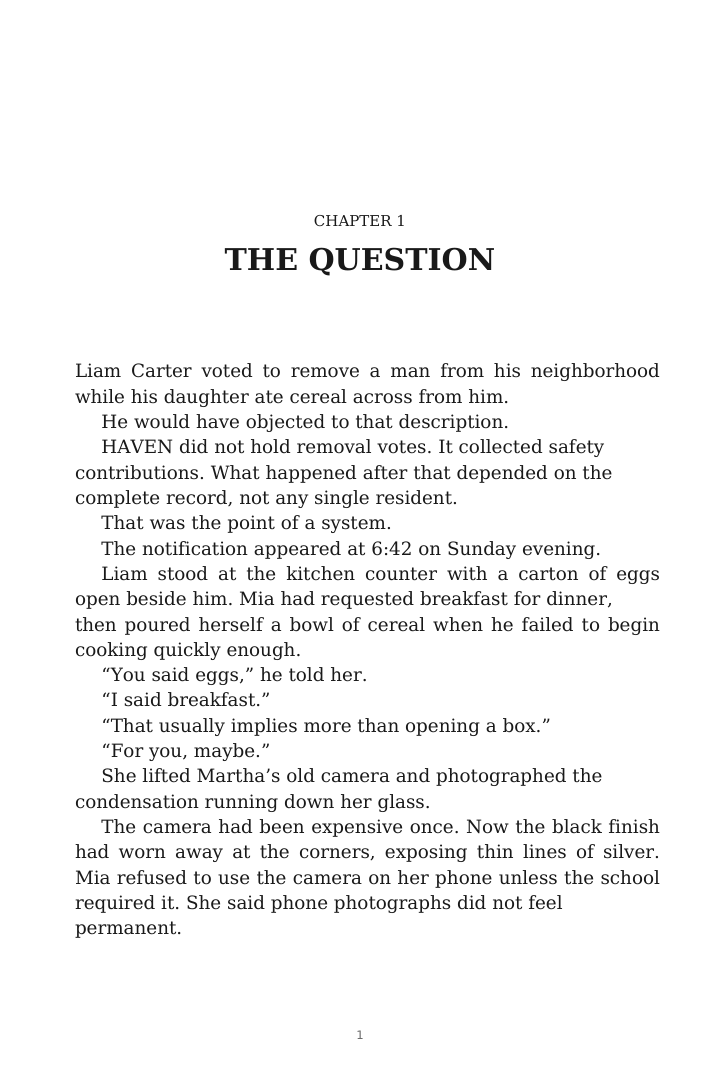
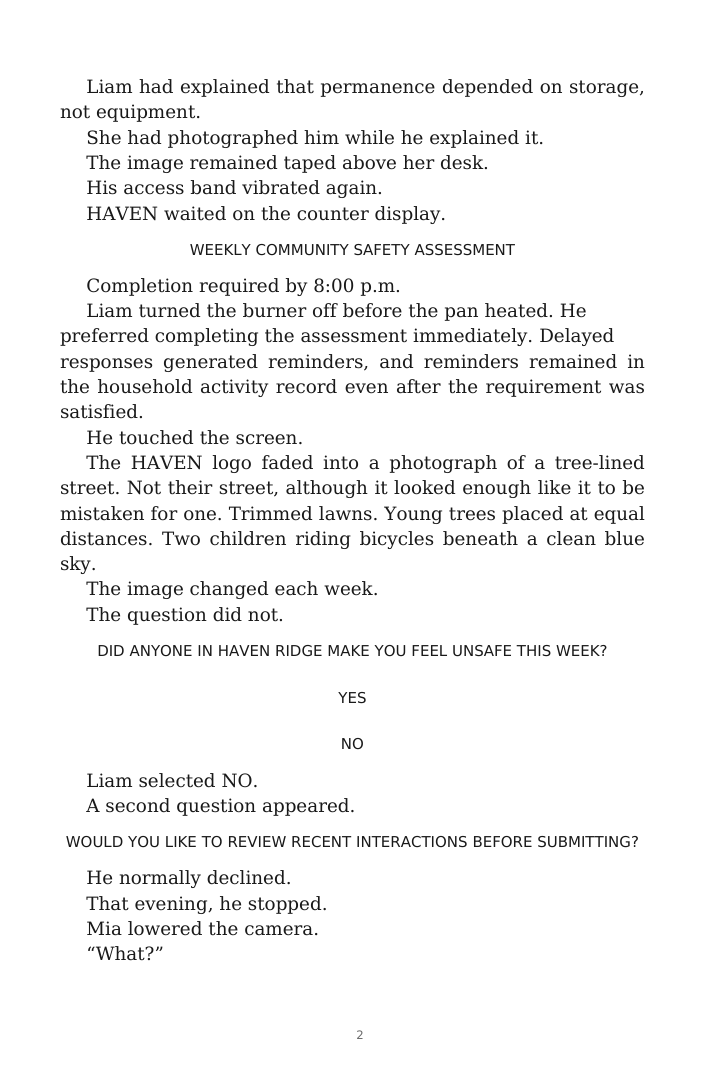
The earlier printed page 1 ended with “Liam had explained that permanence depended on storage,” while page 2 began with the stranded words “not equipment.” The corrected pagination moved the complete two-line paragraph to page 2. The comparison above comes from the actual test PDFs, not a recreated mockup.
What became part of Typeset Ready
The fixes were turned into permanent layout safeguards: source paragraphs remain separate, chapters begin on new pages, scene markers remain centered, title and author running headers are removed, short display sequences stay together, and a two-line minimum is enforced for ordinary prose. The exact PDF preview now uses the same generation path as the download.
What this case study does—and does not—prove
This test demonstrates that Typeset Ready handled one demanding, full-length text manuscript and that defects discovered during inspection became repeatable safeguards. It does not mean every manuscript will be perfect without review. Authors should inspect the complete exported PDF, use KDP Print Previewer, and order a physical proof before publication.
Common questions
Frequently asked questions
Was manuscript text rewritten during the test?
No. The corrections changed pagination and presentation, not the wording of the manuscript.
Does this prove every manuscript will format perfectly?
No. It demonstrates a demanding real-world test. Customers should still inspect the complete PDF, use KDP Print Previewer, and order a physical proof.
Why use a full novel as a test?
Many pagination defects appear only after hundreds of pages interact. A short sample cannot expose threshold gutters, late-book scene breaks, or cumulative reflow.